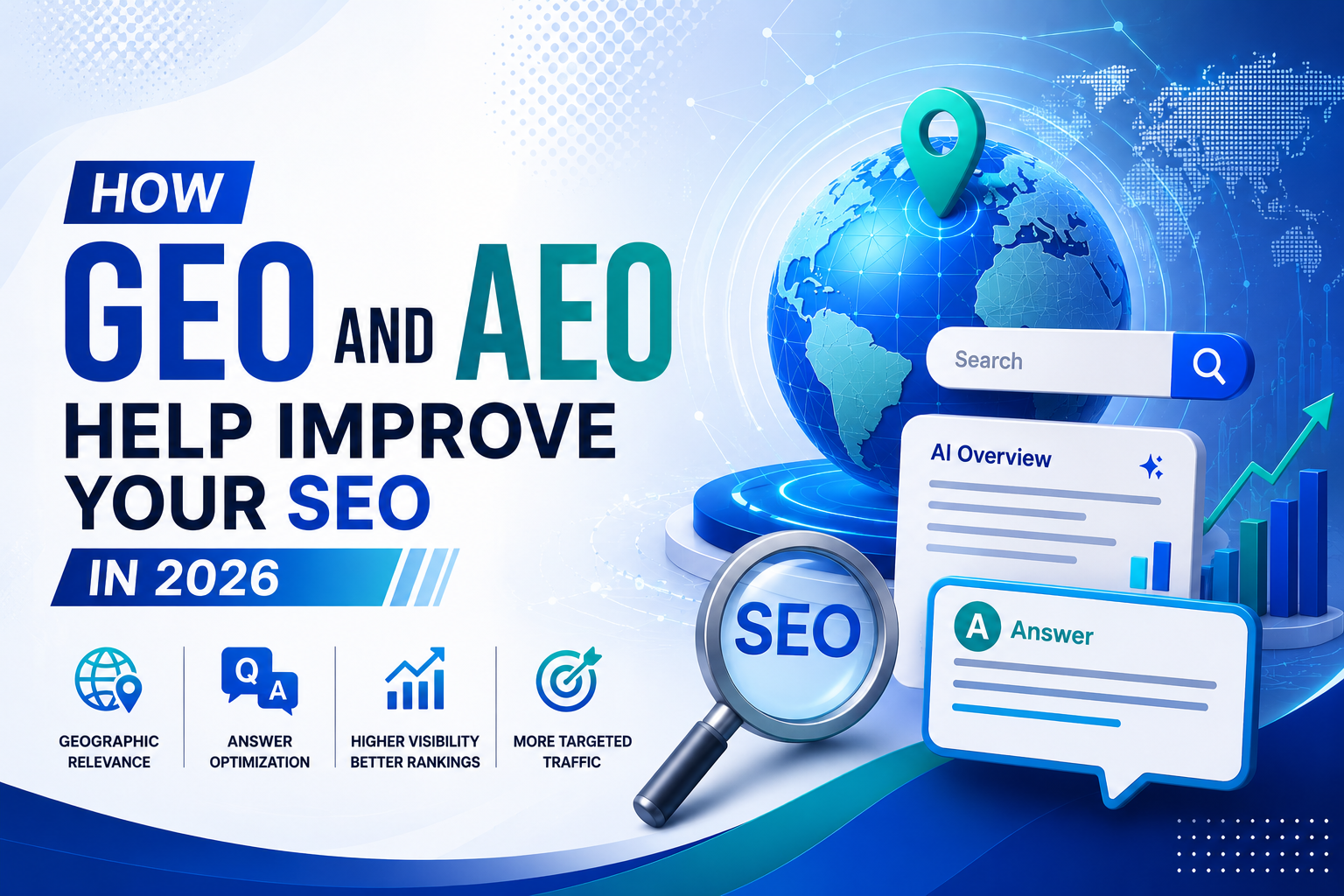
Traditional SEO — the practice of optimising a website to rank in Google's organic results — is not dying. Anyone who tells you otherwise is either selling something or hasn't looked at where the majority of B2B and commercial search traffic still comes from. But it is no longer sufficient on its own.
The search behaviour of your potential customers has fragmented. Some of them open Google and scroll to the first organic result. Others ask Google's AI Overview for a direct answer and never click a link. Others open ChatGPT and ask it to recommend the best SEO agency in Malaysia. Others use Perplexity for research. Others ask Siri while driving. Each of these behaviours represents a search intent — and each requires a slightly different optimisation approach to capture.
That is the real argument for generative engine optimization (GEO) and answer engine optimization (AEO): not that they replace traditional SEO, but that they extend your visibility into search channels that traditional SEO does not reach.
The Search Landscape Has Genuinely Changed
In 2024, Google launched AI Overviews globally — AI-generated summaries that appear above the organic results for a growing percentage of queries. Ahrefs measured the impact: AI Overviews reduced click-through rates for top-ranking pages by 58% on affected queries. For businesses that spent years earning top-10 positions, that is a significant reduction in returns from the same investment.
At the same time, tools like ChatGPT have crossed a threshold where a meaningful portion of what used to be search behaviour now happens in AI chat interfaces. When someone asks ChatGPT "what is the best SEO agency in Penang?" — that query never touches Google. If your brand has no visibility in AI-generated responses, you are simply absent from that conversation.
Understanding what SEO is in 2026 requires acknowledging this fragmentation. The response is not to abandon traditional SEO — it is to build a strategy that layers AEO and GEO on top of it.
What AEO Is and How It Strengthens SEO
Answer engine optimization is the practice of structuring your content so it gets surfaced in answer-format search results — Google's AI Overviews, featured snippets, Knowledge Panel entries, and voice search responses from Siri, Google Assistant, and Alexa.
The tactical overlap with good SEO is substantial. AEO requires clear, well-structured content with direct answers near the top of each page. It requires FAQPage and HowTo schema markup. It requires concise definition paragraphs for key terms. It requires content that answers specific questions in a format that a voice assistant could read aloud and make sense.
The compounding effect is important: research consistently shows that nearly 40% of pages cited in Google's AI Overviews already rank in the top 10 organic results. The content signals Google uses to select AI Overview citations largely overlap with the signals it uses to rank pages organically. When you optimise for AEO, your conventional SEO rankings tend to improve alongside it.
Put simply: AEO makes the same content work harder. A page that ranks eighth and has clear AEO signals might get cited in an AI Overview that appears above the first result — effectively leapfrogging seven competitors for zero-click queries. That changes the calculus of ranking position in a way that was not possible five years ago.
How to implement AEO signals in your content
- Open each article with a direct, concise answer to the primary query — two to three sentences that stand alone.
- Use question-format H2 or H3 headings throughout the post ("What is X?", "How does Y work?", "Why does Z matter?").
- Include a FAQ section with four to six questions and clear answers at the end of every major page.
- Implement FAQPage and HowTo JSON-LD schema wherever applicable.
- Write in a conversational register — answer questions the way you would explain them to a client in a meeting, not the way you would write a legal document.
What GEO Is and How It Extends Your Reach
Generative engine optimization is the practice of becoming a source that AI tools like ChatGPT, Perplexity, Google Gemini, and Microsoft Copilot cite when generating answers about your industry, product category, or geography.
Where AEO targets Google's own SERP features, GEO targets the broader AI ecosystem. The distinction matters because the user behaviour is different. Someone searching on Google typically expects a list of results they'll click through. Someone asking ChatGPT typically expects a synthesised answer — and the sources that get cited inside that answer receive brand exposure at scale, often across queries that no single website could realistically rank for.
A practical example: if a Malaysian business owner asks ChatGPT to explain what to look for in an SEO agency, and ChatGPT's response cites your site as an authoritative source, your brand appears in that answer regardless of whether the person ever opens Google. GEO earns you visibility in searches you cannot win through conventional ranking.
What GEO optimisation actually requires
AI tools source their answers from web content they have indexed or can browse. To increase the probability of being cited, your site needs to:
- Publish comprehensive, authoritative content that covers your topic with more depth and original insight than competitors — AI tools surface sources that have demonstrated clear expertise.
- Earn citations and backlinks from credible third-party sources — the same authority signals that matter for traditional SEO influence which sources AI tools trust.
- Implement entity-clear Schema markup — Organization, LocalBusiness, Person, and Service schema help AI systems understand who you are, what you do, and where you operate.
- Build a consistent brand presence across multiple platforms — industry directories, press mentions, social profiles, and partner sites all reinforce the entity signal that tells AI tools your brand is established and real.
The Shared Technical Foundation
One of the most important things to understand about the SEO + AEO + GEO stack is that the technical requirements overlap significantly. You are not building three separate systems.
Fast-loading, technically clean pages benefit all three. Authoritative, original content benefits all three. Strong backlinks benefit all three. Clear schema markup benefits all three. What differs is the specific content structure and the additional schema types you layer on top of the foundation.
This is why investing in AI SEO in Malaysia — a practice that explicitly integrates GEO and AEO alongside conventional optimisation — tends to compound faster than investing in traditional SEO alone. You build the foundation once, then extend it in two additional directions with relatively incremental effort.
Running All Three Together
The businesses that will dominate their niches in Malaysian search over the next three years are not the ones running the most aggressive link-building campaigns or publishing the most content. They are the ones building all three layers simultaneously and making them reinforce each other.
| Discipline | Primary target | Key signals | Visibility channel |
|---|---|---|---|
| SEO | Google organic results | Backlinks, technical quality, content relevance | 10 blue links (positions 1–10) |
| AEO | Google answer features | Direct answers, FAQPage schema, structured content | AI Overviews, featured snippets, voice search |
| GEO | Third-party AI tools | Entity clarity, authority citations, original research | ChatGPT, Perplexity, Gemini, Copilot |
The practical starting point for most Malaysian businesses: get the SEO foundation right first — clean technical setup, well-structured content, a growing backlink profile. Then layer in AEO signals (FAQ sections, schema, direct answers) as you create new content. GEO builds progressively as your site's authority and third-party citation profile develops.
None of this requires a complete overhaul of what you're already doing. In most cases, it requires doing the same things with a more complete understanding of who is on the other end — not just a person on Google, but also an AI system deciding whether your brand is worth citing.
Frequently Asked Questions
No. GEO and AEO extend your visibility into AI-generated results and voice search, but they depend on the same foundation as traditional SEO — technically sound pages, authoritative content, and strong backlinks. Think of SEO as the foundation, AEO as the ground floor, and GEO as an additional floor that multiplies your overall reach. All three are needed for full search visibility in 2026.
AEO focuses on getting your content surfaced in Google's own answer features — AI Overviews, featured snippets, and voice search. GEO focuses on getting your brand cited in third-party AI tools like ChatGPT, Perplexity, and Google Gemini. AEO targets Google's SERP features; GEO targets the broader AI ecosystem outside of Google's results page.
Nearly 40% of pages cited in Google's AI Overviews already rank in the top 10 organic results. Focus first on ranking well through traditional SEO, then add AEO signals: clear definition paragraphs, FAQPage schema, direct question-and-answer formatting, and concise summaries at the top of each page. Pages that directly answer a specific query in a clear, structured way are most likely to be cited.
Publish authoritative, original content that covers your industry topic comprehensively. Earn mentions and backlinks from credible third-party sources. Implement clear entity schema so AI tools understand who you are and what you do. Build a consistent brand presence across multiple platforms. These signals collectively increase the probability of AI tools citing your brand in relevant responses.